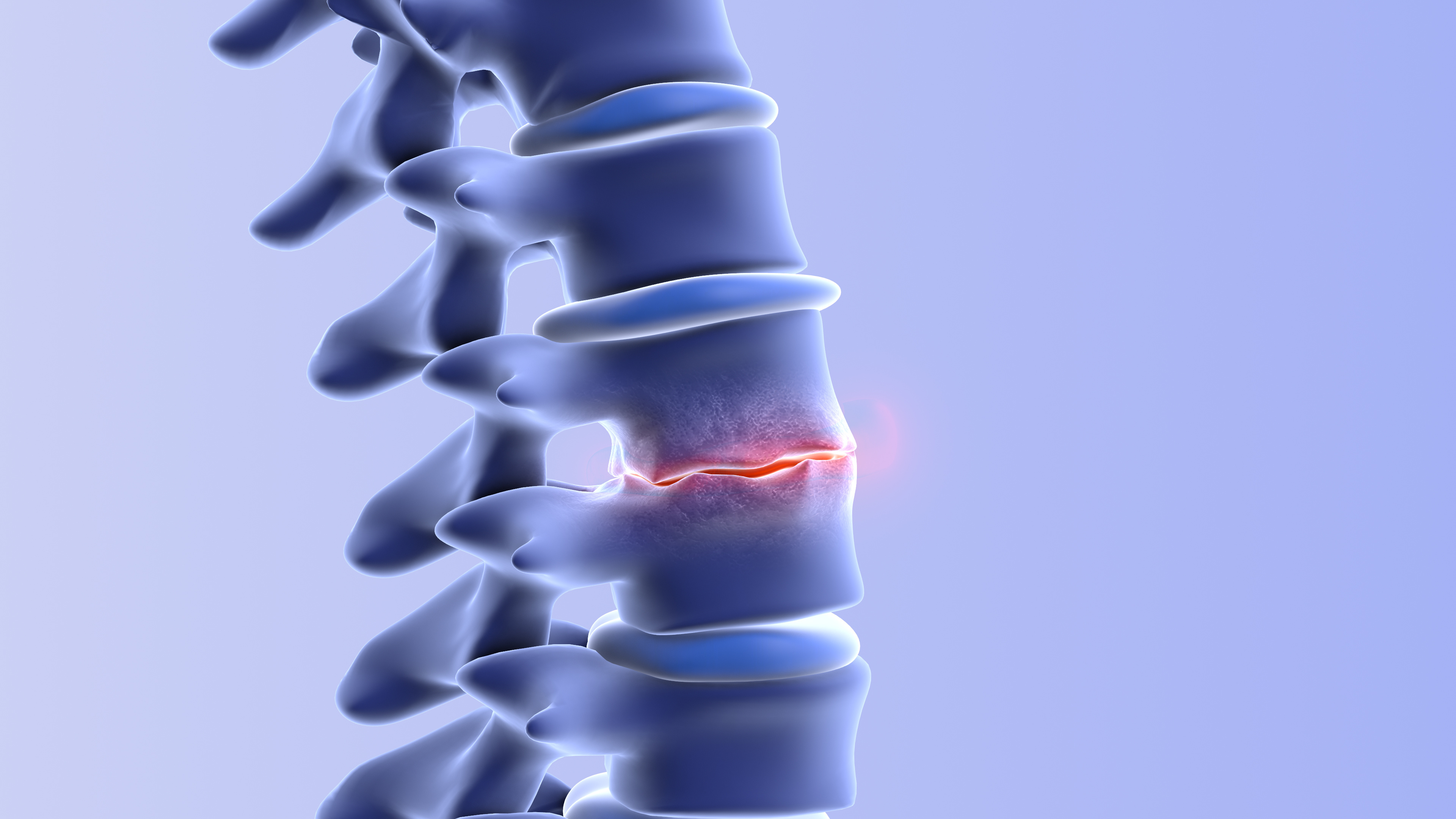
Why Conventional Treatments Often Fall Short
The standard treatment pathway for degenerative disc disease typically follows a predictable sequence: physical therapy, oral anti-inflammatories, epidural steroid injections, and eventually surgical referral if symptoms persist. Each of these has a role, but none addresses the underlying biological process driving degeneration.
Physical therapy strengthens the musculature surrounding the spine and can improve load distribution. But it cannot reverse proteoglycan loss in the nucleus or repair annular fiber disruption. Anti-inflammatory medications reduce pain signaling but do not modify the disease process. They treat the alarm, not the fire.
Epidural steroid injections deliver corticosteroids to reduce inflammation around compressed nerve roots. However, steroids are catabolic-they break down tissue. Repeated steroid injections have been associated with accelerated disc degeneration, reduced disc height, and weakening of the very structures we need to preserve.
Spinal fusion surgery removes the degenerative disc and fuses the adjacent vertebrae. While effective for severe, single-level disease that has failed all conservative measures, fusion eliminates motion at that segment, transferring increased load to adjacent levels-a phenomenon called adjacent segment disease that frequently leads to degeneration at the levels above and below the fusion.
Dr. Crane's Regenerative Approach to Disc Degeneration
Regenerative medicine takes a fundamentally different approach. Rather than masking inflammation or removing damaged tissue, we deliver biological signals and cellular resources that promote the disc's own repair mechanisms.
Regenerative medicine for degenerative disc disease works by delivering concentrated biological signals directly into the degenerating disc under fluoroscopic or ultrasound guidance. These treatments provide growth factors and cellular resources that stimulate the remaining disc cells to produce new extracellular matrix, including proteoglycans and type II collagen - the very components that degeneration depletes.
As I teach other physicians in my regenerative therapeutics courses: the disc has limited vascularity, which is exactly why targeted biologic delivery matters. Systemically administered treatments rarely reach the disc in therapeutic concentrations. Direct intradiscal injection bypasses the vascular limitation and delivers biological repair signals precisely where they are needed.
For patients with more advanced degeneration - significant disc height loss, multiple affected levels, or incomplete response to initial treatment - we have more potent regenerative options available. The specific approach is determined based on your pathology, your response to initial treatment, and your goals.
Emerging research on cellular signaling molecules suggests additional mechanisms by which regenerative treatments may modulate the inflammatory environment within degenerating discs and activate resident progenitor cells.
What to Expect: The Treatment Process
Your consultation begins with a comprehensive evaluation: medical history, physical examination, imaging review, and diagnostic assessment to confirm that the disc is the primary pain generator. If you are a candidate for regenerative treatment, we develop a protocol tailored to your specific pathology.
We track outcomes carefully. If the initial treatment produces meaningful but incomplete improvement, we may recommend additional treatment or adjust the regenerative approach for deeper effect. If you are not responding, we reassess the diagnosis and explore alternative approaches. Intellectual honesty about what is working-and what is not-is fundamental to how I practice.